
Home equity loan vs home equity line of credit

Published September 20, 2024

Updated March 26, 2026

Better
by Better

Best rates for home equity loans

Table of contents:

Home equity loans, often referred to as HELs, are a popular method for homeowners to leverage the equity they've built in their homes. Whether you're looking to finance a renovation project, consolidate debt, or cover a major expense, a home equity loan can provide the funds you need. But how do you qualify for one, and what are the best rates for a home equity loan? Let's explore.

Home equity loan vs home equity line of credit (HELOC)

Before we dive into the specifics of home equity loans, it's important to understand the difference between a Home Equity Loan (HEL) and a Home Equity Line of Credit (HELOC). Both are ways to tap into the equity of your home, but they function differently.

Home equity loan (HEL)

A Home equity loan, or HEL, is a type of loan that allows you to borrow a fixed sum of money against the equity in your home. The loan amount is disbursed in one lump sum, and you repay the loan over a fixed term (typically 15, 20, or 30 years) at a fixed interest rate. This makes HELs a good option for one-time large expenses or projects requiring a fixed lump sum.

Home equity line of credit (HELOC)

On the other hand, a home equity line of credit, or HELOC, is a revolving line of credit that you can draw from as needed during a certain period, known as the draw period. The interest rate on a HELOC is adjustable, and you only pay interest on the amount you've borrowed. This makes HELOCs a more flexible option for ongoing borrowing needs.
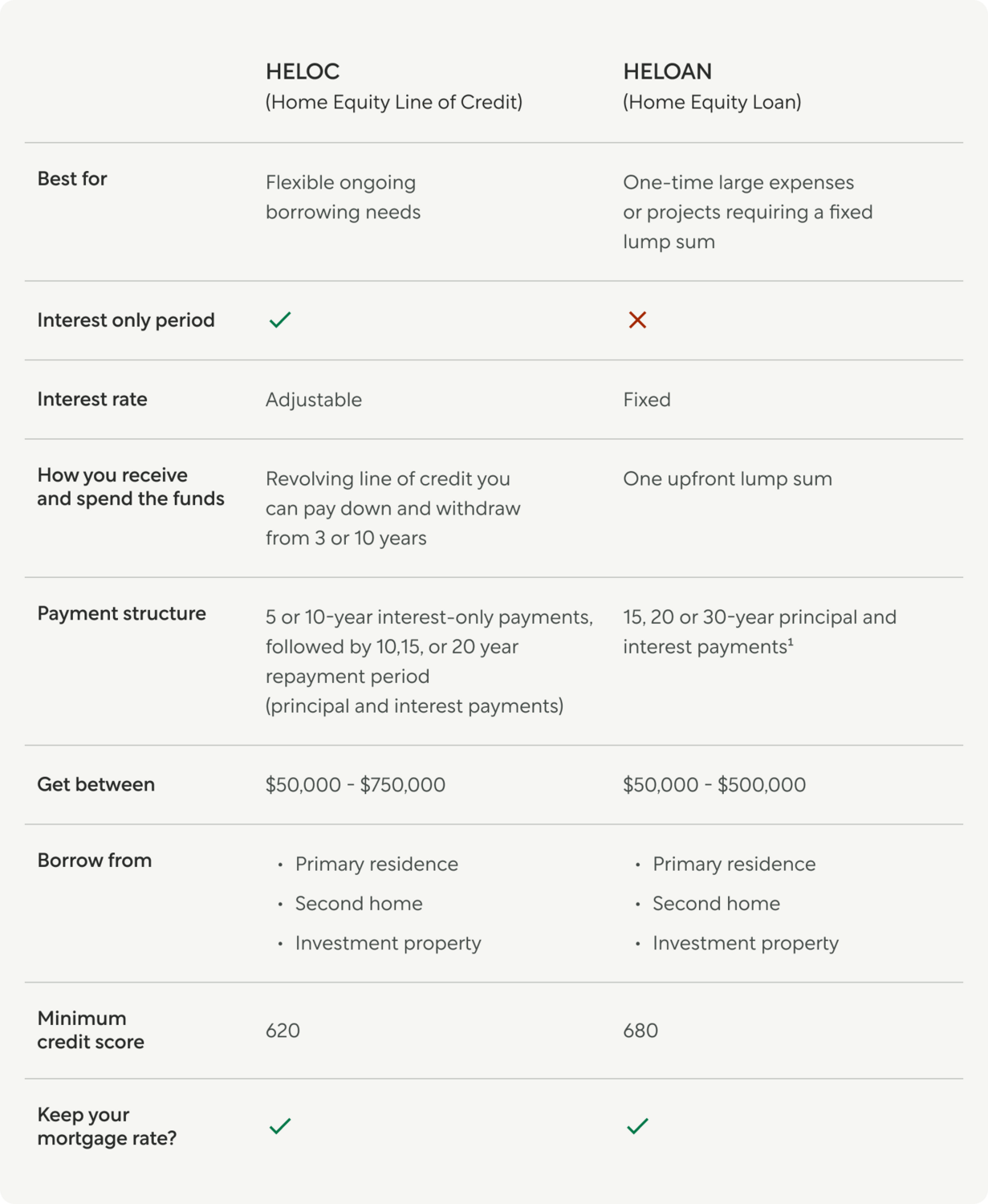
HELOC v. HELOAN

Qualifications for home equity loans

Qualifying for a home equity loan requires meeting certain criteria. Here are the typical qualifications:


  • Equity in your home: You need to have a certain amount of equity in your home, typically at least 15-20%.

    With Better, you can borrow up to 90% of your home’s equity, giving you more flexibility than traditional lenders that require you to keep 15–20% untouched.

  • Stable income: Lenders will want to see that you have a stable income that's sufficient to cover the loan payments.

  • Good credit score: A good credit score is typically required. At Better Mortgage, the minimum credit score for a home equity loan is 680.


  • Debt-to-income ratio: Lenders will also look at your debt-to-income ratio (DTI). This is the percentage of your monthly gross income that goes towards paying debts.

    Best rates for home equity loans


    The interest rate you'll get on a home equity loan can vary based on several factors, including your credit score, loan amount, and the lender you choose. To get the best rates for a home equity loan, you'll want to:

  • Maintain a good credit score: The higher your credit score, the lower your interest rate is likely to be.

  • Shop around: Rates can vary between lenders, so it's a good idea to get quotes from multiple lenders to ensure you're getting the best rate.

  • Consider a shorter loan term: While a longer term will result in lower monthly payments, it will also result in a higher overall cost due to more interest payments. If you can afford higher monthly payments, a shorter loan term could save you money in the long run.

    Remember, the best home equity loan for you depends on your individual circumstances and goals. It's always a good idea to talk to a loan consultant to understand your options and find the best solution for your needs.

    More Resources

    Home Refinance vs Home Equity Loan: Which Is Right for You?
    Everything you need to know about HELOC loans

  • Related posts

    FHA closing costs: What they cover and how to reduce them

    Learn what FHA closing costs are, how they work, and what they cover. Explore estimated fees and strategies to reduce the final amount.

    Read now

    What is an ARM loan? How adjustable-rate mortgages work

    An ARM loan starts with a fixed interest rate for a set number of years, then adjusts periodically based on a market index. Learn how ARM rates work, what the caps mean, and whether an adjustable-rate mortgage makes sense for you.

    Read now

    What’s a deed of trust and how does it differ from a mortgage?

    What’s a deed of trust, and how does it work? Learn the basic definition, the parties involved, and what makes it different from a traditional mortgage.

    Read now

    When selling a house, who pays for what: A strategic guide to negotiating every dollar

    When selling a house, who pays for what, learn which costs buyers and sellers usually cover, from commissions to inspections, appraisals, to avoid surprises.

    Read now

    Combined loan to value (CLTV): How to calculate and examples

    Learn what combined loan-to-value (CLTV) means, how it differs from LTV, why it's important for home equity, its formula, and ways to improve your ratio.

    Read now

    A guide to understanding title fees

    Better Settlement Service’s comprehensive guide to the title fees and closing costs associated with buying or refinancing a home.

    Read now

    Cash-out refinances vs. HELOCs: What’s the better option?

    Understand the differences between cash-out refinances vs. HELOCs. Learn how they work and compare pros and cons to find the best option for your goals.

    Read now

    Mortgage rates today: April 9, 2026

    Today's mortgage rates, what's moving them, and what spring homebuyers need to know right now — April 9, 2026.

    Read now

    Is Better a good lender for a HELOC?

    Better offers HELOCs from $50K–$750K with a 620 minimum credit score on primary, secondary, and investment properties. Here's what makes Better stand out — and what to know before you apply.

    Read now

    Related FAQs

    Interested in more?

    Sign up to stay up to date with the latest mortgage news, rates, and promos.